
Nuestra evidencia
Última actualización: 27 de junio de 2026.
Manteniendo los más altos estándares: Medicina Basada en Evidencia (MBE) y Medicina de Laboratorio Basada en Evidencia (MLBE)
En Blueberry Diagnostics, nuestro compromiso fundacional está arraigado en el avance estricto de la Medicina Basada en Evidencia (MBE) y la Medicina de Laboratorio Basada en Evidencia (MLBE).
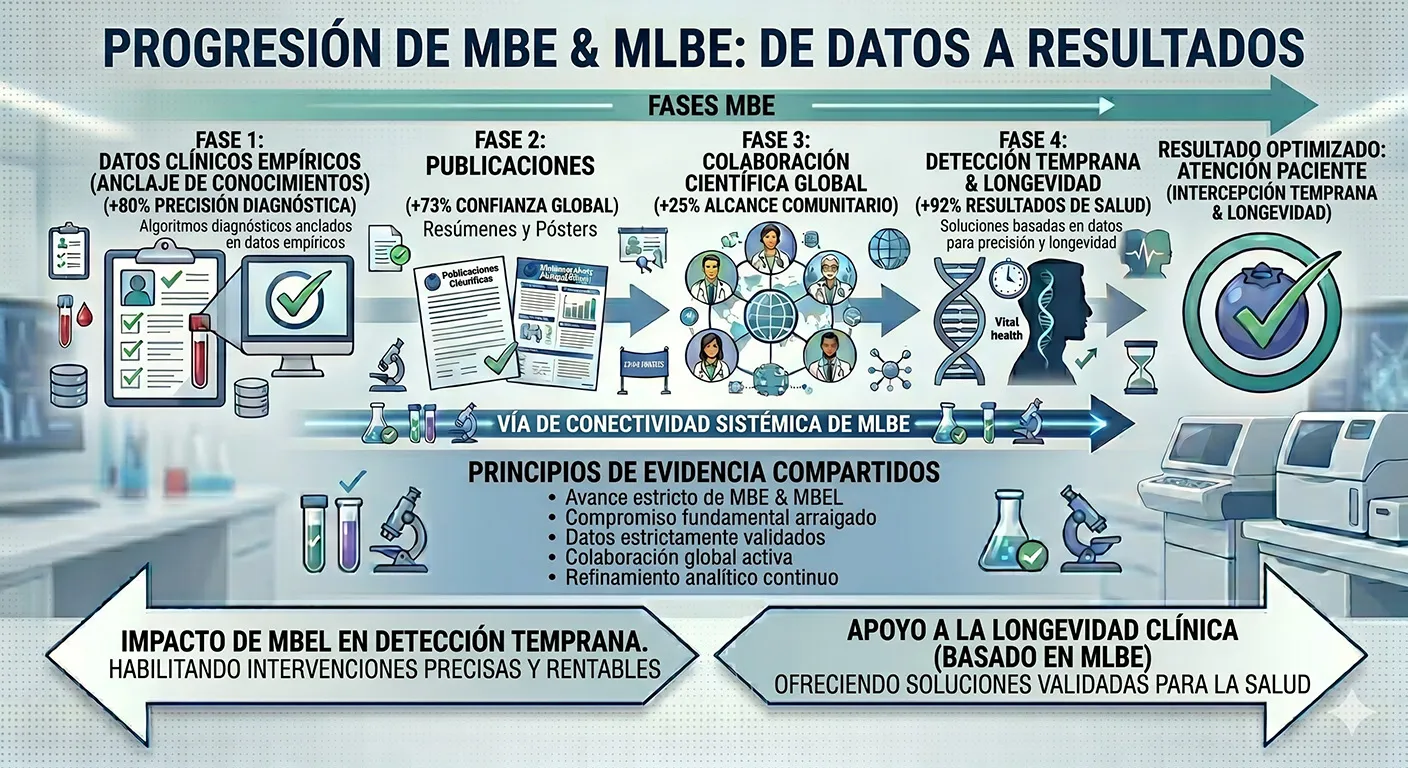
Nos aseguramos de que cada algoritmo de diagnóstico e información analítica que ofrecemos esté anclado en datos clínicos empíricos y verificables.
Ensayos clínicos
Los ensayos clínicos son estudios de investigación realizados en personas que tienen como objetivo evaluar una intervención médica, quirúrgica o conductual, e involucran a un comité de ética y el consentimiento informado de los pacientes para garantizar el rigor médico del proceso. Son la vía principal por la cual los investigadores descubren nuevos tratamientos para las enfermedades, así como nuevas formas de detectar, diagnosticar y reducir las probabilidades de desarrollar la enfermedad.
En Blueberry Diagnostics, basamos nuestros ensayos clínicos en estudios de casos y controles, que consisten en comparar la frecuencia de exposición en un grupo de sujetos que padecen la enfermedad estudiada (casos) con respecto a otro grupo libre de esa enfermedad (controles).
Evidencia presentada
Hasta la fecha, hemos presentado los resultados de varios de nuestros propios estudios —en forma de resúmenes y pósters—, en algunos de los congresos y conferencias más importantes de todo el mundo.
Evidencia presentada relacionada con chequeos de salud para cribado —screening— y prevención
Chequeo de salud básico para cribado y prevención
Antecedentes y objetivo: Desarrollar un nuevo test no invasivo de medicina de laboratorio basada en evidencia (MLBE) con el fin de ayudar a los profesionales de la salud a evaluar las principales funciones, sistemas y metabolismos corporales, así como evaluar su precisión en la detección de las principales enfermedades no malignas, de alta prevalencia, mórbidas, precursoras del cáncer y potencialmente mortales.
Chequeo de salud integral para cribado y prevención
Antecedentes y objetivo: Desarrollar un test integral y no invasivo de medicina de laboratorio basada en evidencia (MLBE) con el fin de ayudar a los profesionales de la salud a evaluar la mayoría de las funciones, sistemas y metabolismos corporales, así como evaluar su precisión en la detección de las principales enfermedades tanto benignas como malignas, de alta prevalencia, mórbidas, precursoras del cáncer y potencialmente mortales.
Evidencia presentada relacionada con chequeos de salud para cribado —screening— y prevención en diferentes sistemas y funciones corporales
Función de transporte y almacenamiento de hierro
Antecedentes y objetivo: Desarrollar un nuevo test no invasivo de medicina de laboratorio basada en evidencia (MLBE) para ayudar a los profesionales de la salud a evaluar la función de transporte y almacenamiento de hierro, y evaluar su precisión en la detección de los principales tipos de anemia (normocítica, microcítica, macrocítica), sus causas principales (enfermedad hepática, deficiencia de vitamina B12, hemorragia o enfermedad renal crónica) y otros trastornos hematológicos.
Función cardiovascular
Antecedentes y objetivo: Desarrollar un nuevo test no invasivo de medicina de laboratorio basada en evidencia (MLBE) para ayudar a los profesionales de la salud a evaluar la función cardiovascular, así como evaluar su precisión en la detección de las principales enfermedades cardiovasculares (ECV) y el riesgo de desarrollarlas a lo largo de un periodo de 10 años.
Función endocrina pancreática
Antecedentes y objetivo: Desarrollar un nuevo test de medicina de laboratorio basada en evidencia (MLBE) para ayudar a los profesionales de la salud a evaluar la función endocrina pancreática, así como evaluar su precisión en la detección de las principales enfermedades y trastornos endocrinos del páncreas, incluyendo la resistencia a la insulina, la prediabetes y la diabetes mellitus tipo 2, entre otros.
Función tiroidea
Antecedentes y objetivo: Desarrollar un nuevo test de medicina de laboratorio basada en evidencia (MLBE) para ayudar a los profesionales de la salud a evaluar la función tiroidea, así como evaluar su precisión en la detección de las principales enfermedades de la tiroides, incluyendo el hipotiroidismo, el hipotiroidismo subclínico, el hipertiroidismo y la enfermedad de Graves, entre otras.
Función paratiroidea
Antecedentes y objetivo: Desarrollar un nuevo test de medicina de laboratorio basada en evidencia (MLBE) para ayudar a los profesionales de la salud a evaluar la función paratiroidea y el metabolismo óseo, así como evaluar su precisión en la detección de las principales enfermedades paratiroideas, incluyendo el hiperparatiroidismo primario, el hiperparatiroidismo secundario y el hipoparatiroidismo, entre otras.
Función hepatobiliar
Antecedentes y objetivo: Desarrollar un nuevo test de medicina de laboratorio basada en evidencia (MLBE) para ayudar a los profesionales de la salud a evaluar la función hepática y exocrina biliar-pancreática, así como evaluar su precisión en la detección de las principales enfermedades hepáticas y biliares, incluyendo la enfermedad hepática crónica, la esteatosis, la hepatitis, la cirrosis y los trastornos de las vías biliares, entre otras.
Función renal
Antecedentes y objetivo: Desarrollar un nuevo test no invasivo de medicina de laboratorio basada en evidencia (MLBE) para ayudar a los profesionales de la salud a evaluar la función renal, así como evaluar su precisión en la detección de los principales estadios de la enfermedad renal crónica (ERC) y sus trastornos relacionados.
Metabolismo hidroelectrolítico
Antecedentes y objetivo: Desarrollar un nuevo test no invasivo de medicina de laboratorio basada en evidencia (MLBE) para ayudar a los profesionales de la salud a evaluar el metabolismo hidroelectrolítico, así como evaluar su precisión en la detección de desequilibrios electrolíticos y trastornos relacionados.
Función prostática
Antecedentes y objetivo: Desarrollar un nuevo test no invasivo de medicina de laboratorio basada en evidencia (MLBE) para ayudar a los profesionales de la salud a evaluar la función prostática, así como evaluar su precisión en la detección de los principales trastornos de la próstata, incluyendo la hiperplasia benigna de próstata, la prostatitis y otras patologías prostáticas.
Evidencia presentada relacionada con cribado —screening— de cáncer
Cribado del cáncer de mama
Antecedentes y objetivo: A pesar de los diversos métodos disponibles para la detección temprana del cáncer de mama (principalmente la mamografía para mujeres de entre 50 y 65 años) y sus beneficios demostrados, la morbilidad y la mortalidad por esta neoplasia siguen siendo elevadas, debido en parte a las limitaciones técnicas y a la baja adherencia a los programas de cribado. El objetivo del presente estudio fue evaluar la precisión diagnóstica para la detección temprana del cáncer de mama mediante un algoritmo de modelado basado en múltiples biomarcadores en sangre y orina.
Cribado del cáncer colorrectal
Antecedentes y objetivo: A pesar de los diversos métodos disponibles para la detección temprana del cáncer colorrectal (CCR) y sus beneficios demostrados, la morbilidad y la mortalidad asociadas con esta neoplasia siguen siendo elevadas, debido en parte a las limitaciones técnicas y a la baja adherencia a los programas de cribado. En este sentido, el objetivo del presente estudio fue evaluar la precisión diagnóstica para la detección temprana del CCR mediante un algoritmo de modelado basado en múltiples biomarcadores en sangre y orina.
Cribado del cáncer de hígado
Antecedentes y objetivo: El carcinoma hepatocelular (CHC) representa entre el 75% y el 85% de las neoplasias malignas de hígado y constituye la tercera causa principal de mortalidad relacionada con el cáncer a nivel mundial. Desafortunadamente, el CHC se presenta habitualmente en estadios avanzados, lo que plantea desafíos significativos para su tratamiento y abordaje clínico.
Cribado del cáncer de ovario
Antecedentes y objetivo: El cáncer de ovario ocupa el séptimo lugar entre los cánceres femeninos y el octavo en muertes relacionadas con el cáncer en mujeres. A pesar de su baja incidencia, su impacto es considerable debido a su detección tardía y a las limitadas opciones de tratamiento. Conocido como el «asesino silencioso» por sus síntomas inespecíficos, a menudo conduce a un diagnóstico tardío y a la presencia de metástasis. Por lo tanto, la detección temprana sigue siendo un desafío.
Cribado del cáncer de próstata
Antecedentes y objetivo: El cáncer de próstata es el cuarto tipo de cáncer más común en el mundo y el segundo más frecuente en hombres, según la World Cancer Research Fund (WCRF) International.
Chequeo de cribado de detección temprana multicáncer (MCED)
Antecedentes y objetivo: Desarrollar un test integral y no invasivo de medicina de laboratorio basada en evidencia (MLBE) para ayudar a los profesionales de la salud a realizar el cribado de múltiples tipos de cáncer y cientos de enfermedades benignas de forma simultánea.
Evidencia presentada relacionada con confirmación diagnóstica de cáncer
Confirmación del cáncer colorrectal
Antecedentes y objetivo: A pesar de los diversos métodos disponibles para la detección temprana del cáncer colorrectal (CCR) y sus beneficios demostrados, la morbilidad y la mortalidad asociadas con esta neoplasia siguen siendo elevadas, debido en parte a las limitaciones técnicas y a la baja adherencia a los programas de cribado. En este sentido, el objetivo del presente estudio fue evaluar la precisión diagnóstica para la detección temprana del CCR mediante un algoritmo de modelado basado en múltiples biomarcadores en sangre y orina.
Confirmación del cáncer de pulmón
Antecedentes y objetivo: Esta neoplasia maligna representa un problema de salud global, con una alta incidencia, mortalidad y un profundo impacto socioeconómico debido a procedimientos diagnósticos invasivos y costosos. Por lo tanto, se necesita un nuevo test no invasivo que proporcione un diagnóstico de confirmación del cáncer de pulmón. Basándose en esta necesidad, el objetivo de este estudio fue realizar un metaanálisis integral para evaluar sistemáticamente la precisión diagnóstica estimada de nuestro algoritmo de biomarcadores desarrollado para confirmar o descartar el cáncer de pulmón.